Suminagashi Workshop in Boulogne-Billancourt
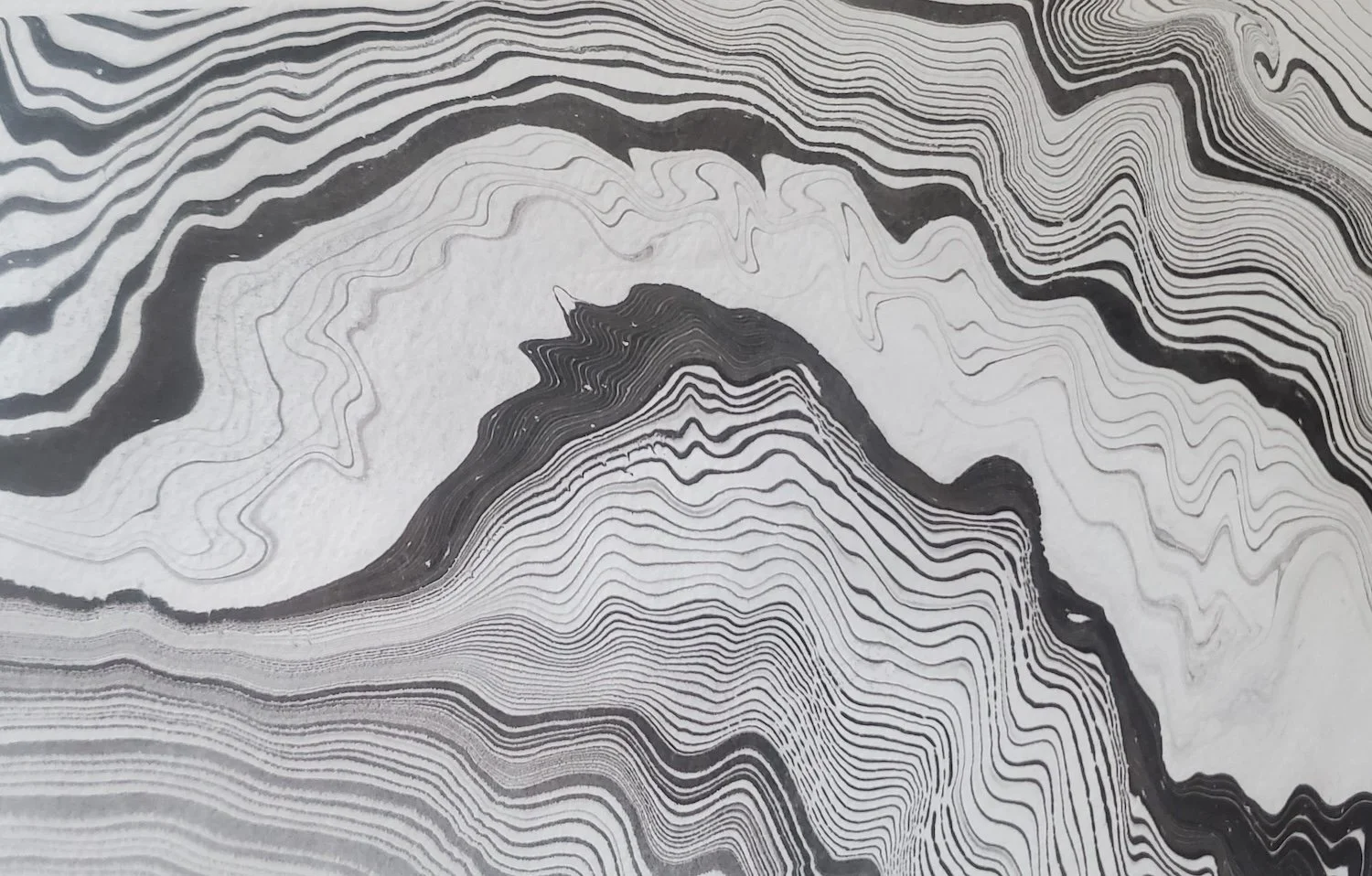
Ink that floats
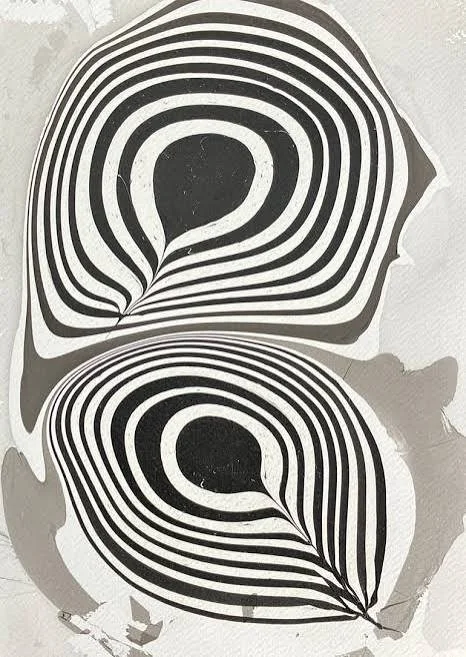
A shallow tray of still water. A brush loaded with ink touches the surface and does not sink — it spreads into a ring. A second brush, loaded with a dispersant, touches the same point and pushes the first ring outward. Ink, dispersant, ink, dispersant, until twenty concentric rings sit on the water, trembling.
Then you interfere. A breath across the surface, a cat's whisker drawn through it, a comb, a straw. The rings stretch and fold into something that has never existed before and will not exist again. You lay a sheet of paper flat onto the water, lift it, and the image is yours — or it isn't, because it moved at the wrong moment.
Suminagashi — 墨流し, floating ink — is the oldest known form of paper marbling, practised in Japan since the twelfth century to prepare grounds for poetry and calligraphy. It cannot be planned and it cannot be repeated. What you learn in two hours is not how to make a pattern you have in mind, but how to set up conditions and then intervene well. Most people find that far more interesting.
2 hours · 7 participants maximum · €65, all materials included · French, English, Mandarin
The two hours
1 · The water (30 min)
Why ink floats and what makes it move. Preparing the tray, the inks and the dispersant, and setting up your own station — everyone works on their own bath.
2 · First floats (45 min)
Building concentric rings, reading the surface, and capturing. The lift is the hardest part and the fastest to learn: one motion, no hesitation. By the end of this hour you will have several sheets you want to keep.
3 · Intervening (45 min)
Breath, whisker, comb, straw. Layering colours, working in series, and deciding when a surface is finished — which is usually earlier than you think.
What you take home
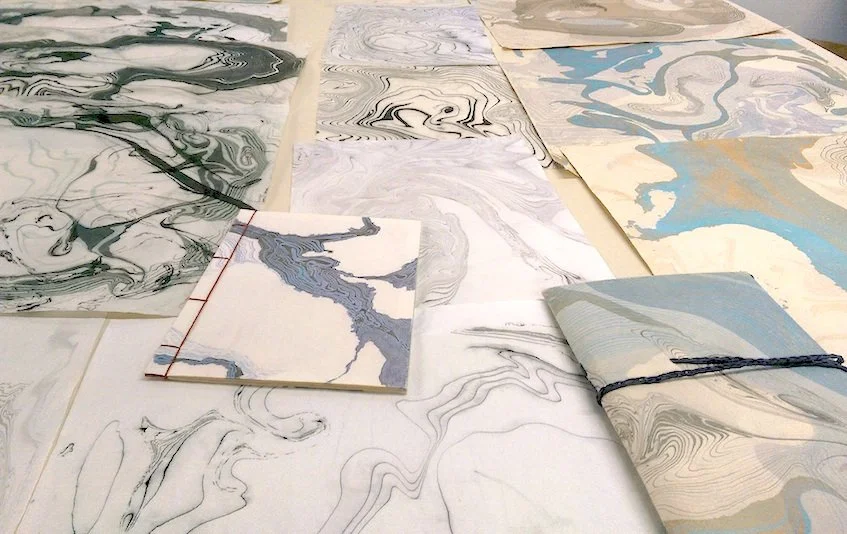
Ten to fifteen finished sheets, dry and flat, in a portfolio. Every one is unique and none can be reproduced, including by us.
Plus what you need to continue: the materials list, where to find them in Paris, and how to set up a tray at home.
Who it's for
Absolutely no experience required — not in drawing, not in painting, not in anything. Suminagashi is one of the very few techniques where a first attempt can be as good as a hundredth.
It suits complete beginners, anyone curious about Japanese craft, bookbinders and stationers looking for their own papers, and children from eight upwards accompanied by an adult.
Seven people maximum, one tray each.
Who leads it
The workshop is led by Feishan Hsieh, a Taiwanese artist based between Paris and Taipei.
Her own paintings are the exact opposite of this: surfaces built up over weeks, layer on layer, two millimetres deep. Suminagashi is a single instant with no thickness at all — captured or lost. She teaches it because the two extremes explain each other, and because watching a room of people concentrate on a tray of water is worth the afternoon.
She teaches in French, English and Mandarin.
-
2 hours
-
7 participants maximum, one tray each
-
€65 per person, all materials included
-
5 Rue de Sèvres, 92100, Boulogne-Billancourt
-
Métro Pont de Saint-Cloud, 3 minutes on foot
-
French, English, Mandarin
-
Something you don't mind marking. Chinese ink does not come out.
-
Required. The session runs from four participants.
Practical Details
Frequently Asked Questions
-
No — and this is not a polite reassurance. The pattern is made by water, ink and your intervention, not by draughtsmanship. It is the most level starting line of any workshop we run.
-
Between ten and fifteen, depending on how fast you work. They dry during the session and go home flat in a portfolio.
-
Frame them, bind them into a notebook cover, use them as endpapers, cut them into cards. Several participants come specifically to make their own papers for bookbinding.
-
Yes, entirely: tray, inks, dispersant, tools, paper and portfolio. Bring nothing.
-
From eight years old, accompanied by a registered adult. Suminagashi is more forgiving than calligraphy and children often do it very well.
-
Yes. A gift voucher valid for one year is available at booking.
-
The method is. We use traditional sumi ink alongside contemporary acrylic inks, which behave differently and open up colour ranges the twelfth century didn't have. Both are explained.